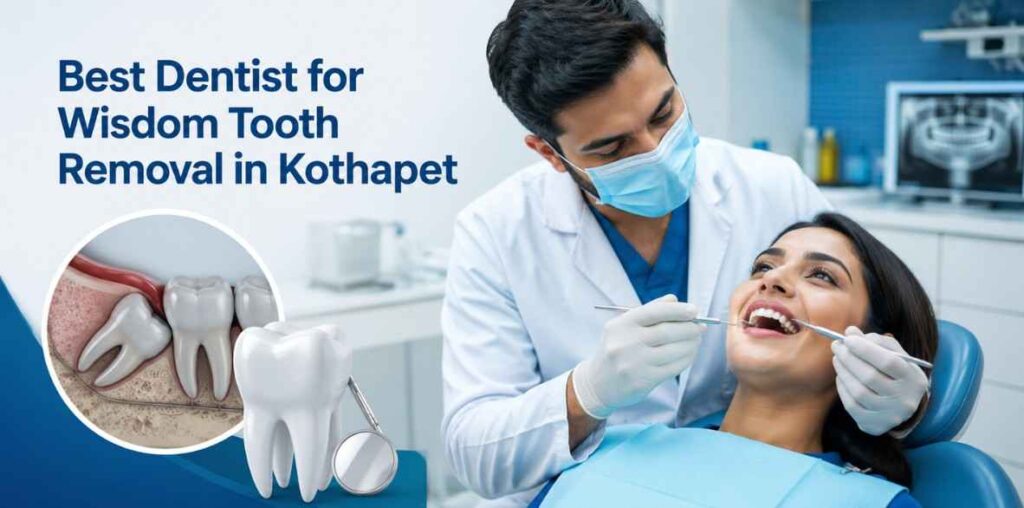
Why Wisdom Teeth Cause Problems
Wisdom teeth, or third molars, typically emerge in the late teens or early twenties, often when there isn’t enough room in the jaw to accommodate them properly. This can cause them to grow at an angle, become partially trapped beneath the gum (impacted), or push against neighboring teeth, leading to pain, infection, or misalignment over time.
Symptoms That Signal You May Need Removal
– Persistent pain or tenderness at the back of the jaw
– Swelling or redness in the gums around the wisdom tooth area
– Difficulty opening your mouth fully
– Bad breath or an unpleasant taste, sometimes signaling infection
– Visible partial eruption of a tooth with inflamed surrounding gum
– Headaches or jaw stiffness associated with pressure from misaligned teeth
Not every wisdom tooth causes symptoms, some remain fully impacted without pain, which is why regular dental check-ups and imaging are important for monitoring their position over time.
Causes of Wisdom Tooth Complications
– Insufficient jaw space to accommodate the emerging tooth
– Angled or horizontal growth pushing against adjacent molars
– Partial eruption creating a gum flap where bacteria can accumulate
– Cysts or, less commonly, other complications developing around an impacted tooth
How Wisdom Tooth Removal Is Diagnosed
Diagnosis typically involves a clinical examination and dental X-rays, sometimes a panoramic X-ray or CBCT scan, to assess the wisdom tooth’s position, its relationship to nerves and the jawbone, and the degree of impaction. This imaging helps your dentist determine whether a simple extraction is sufficient or whether a surgical approach is needed.
Treatment Options: Simple vs Surgical Extraction
| Factor |
Simple Extraction |
Surgical Extraction |
| Tooth position |
Fully erupted, accessible |
Impacted or partially erupted |
| Procedure complexity |
Straightforward removal |
May involve incision and sectioning of the tooth |
| Anesthesia |
Local anesthesia |
Local anesthesia, sometimes with sedation |
| Recovery time |
Generally shorter |
May take slightly longer |
| Stitches required |
Usually not |
Often, dissolvable stitches |
Your dentist will determine which approach applies to your specific wisdom tooth based on its position and the imaging results.
Benefits of Timely Removal
Removing problematic wisdom teeth before complications worsen can help prevent recurring infections, reduce the risk of damage to neighboring teeth, and address crowding or misalignment concerns. Patients experiencing chronic discomfort often find meaningful relief once the source of pressure or infection is resolved.
Who Is a Good Candidate for Removal?
Removal is generally recommended for patients with:
– Impacted wisdom teeth causing pain or recurring infection
– Wisdom teeth contributing to decay or damage in neighboring teeth
– Cysts or other complications associated with an impacted tooth
– Wisdom teeth positioned in a way that makes proper cleaning difficult, increasing decay risk
Not every wisdom tooth requires removal. Some fully erupted, properly aligned wisdom teeth that are easy to clean may not need extraction, which is why individualized evaluation matters.
Recovery & Aftercare
Most patients experience swelling and mild discomfort for the first few days, generally manageable with prescribed pain relief and ice application. Soft foods are recommended initially, along with gentle oral hygiene that avoids disturbing the extraction site. Most patients return to normal activity within about a week to ten days, though full healing of the underlying bone and gum tissue takes longer. Your dentist will provide specific aftercare instructions, including any signs of complications to watch for, such as excessive bleeding or worsening pain.
Risks of Delaying Treatment
Delaying removal of a problematic wisdom tooth can allow infection to spread, increase damage to neighboring teeth, and in some cases lead to cyst formation around the impacted tooth. Waiting longer can also make the eventual extraction more complex if the tooth’s position or associated complications worsen over time.
Prevention Tips
– Attend regular dental check-ups so your dentist can monitor wisdom tooth development through imaging
– Maintain good oral hygiene around partially erupted wisdom teeth to reduce infection risk
– Report any pain, swelling, or discomfort at the back of the jaw promptly rather than waiting
– Discuss wisdom tooth positioning with your dentist during your teenage or young adult years, when monitoring can guide timely decisions
Frequently Asked Questions
1. Who is the best dentist for wisdom tooth removal near Nagole?
Look for a dentist with experience in both simple and surgical extractions, supported by diagnostic imaging capabilities. Smile Care Dental Hospital in Kothapet is accessible for patients from Nagole and surrounding areas.
2. What is the wisdom tooth extraction cost in Kothapet?
Cost depends on factors like whether the extraction is simple or surgical, the tooth’s position, and anesthesia requirements. A personalized estimate is provided after a clinical evaluation and X-ray.
3. What is recovery like after wisdom tooth removal?
Most patients experience swelling and mild discomfort for a few days, with a return to normal activity generally within a week to ten days, depending on the complexity of the extraction.
4. Is wisdom tooth removal painful?
The procedure is performed under anesthesia to minimize pain during removal. Some soreness and swelling afterward are common, generally manageable with prescribed care.
5. Do all wisdom teeth need to be removed?
No, wisdom teeth that are fully erupted, properly aligned, and easy to clean may not require removal. Your dentist will assess this individually.
When Should You See a Dentist?
Schedule a dental evaluation if you’re experiencing pain, swelling, or discomfort at the back of your jaw, or if you haven’t had your wisdom teeth evaluated with imaging in your late teens or twenties. Early monitoring allows your dentist to identify potential issues before they become more complicated.
Why Choose Smile Care Dental Hospital?
At Smile Care Dental Hospital in Kothapet, our dental team combines experienced clinical judgment with modern diagnostic imaging to evaluate wisdom tooth cases individually, recommending simple or surgical extraction based on what your specific tooth actually needs. We prioritize clear communication about the procedure and pain management approach, helping patients feel informed and comfortable throughout the process. With over 25 years of experience, our team focuses on patient-centered care rather than a one-size-fits-all approach.
Conclusion
Wisdom tooth removal is a common, well-established procedure, but the right approach depends on your tooth’s specific position and condition. Understanding your symptoms, treatment options, and what recovery involves can help you approach this decision with more confidence. If you’re experiencing wisdom tooth discomfort or want an evaluation, we encourage you to schedule a consultation with our team at Smile Care Dental Hospital in Kothapet.
This article is intended for general informational purposes and does not replace professional dental advice. Please consult a qualified dentist to discuss your individual diagnosis and treatment options.