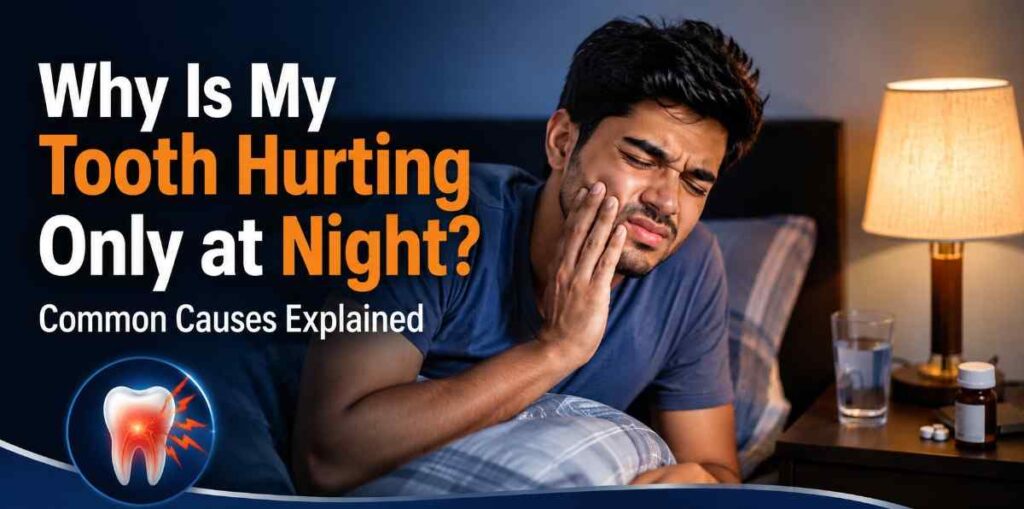
Why Does Tooth Pain Get Worse at Night?
There are a few genuine physiological reasons why tooth pain seems to intensify once you lie down, and understanding them helps make sense of what you’re experiencing.
Increased blood flow when lying flat
When you lie down, blood flow to your head increases slightly, which can increase pressure within an already inflamed or infected tooth, intensifying pain.
Fewer distractions
During the day, work, conversation, and general activity naturally divert your attention. At night, with fewer distractions and a quiet environment, pain that was present all along simply becomes more noticeable.
Jaw positioning and pressure
Certain sleeping positions can place additional pressure on specific teeth or jaw areas, particularly if you grind your teeth at night, a habit many people are unaware of until a dentist points out the wear patterns.
Hormonal and cortisol fluctuations
Cortisol, a hormone that has some natural anti-inflammatory effect, tends to be lower at night, which may make inflammation and associated pain feel more pronounced during sleep hours.
Common Causes of Nighttime Tooth Pain
Untreated Tooth Decay
Deep cavities that have reached the inner pulp of the tooth are one of the most common causes of pain that worsens at night, as the nerve becomes more sensitive to pressure and temperature changes.
Dental Abscess
An infection at the root of a tooth or in the surrounding gum tissue can cause a deep, throbbing pain that often intensifies when lying down due to increased blood flow and pressure buildup.
Teeth Grinding (Bruxism)
Many people grind or clench their teeth unconsciously during sleep, placing excess pressure on teeth and jaw muscles, which can cause or worsen tooth pain specifically at night.
Sinus Pressure
Sinus infections or congestion can sometimes cause referred pain in the upper back teeth, which may feel worse when lying flat due to increased sinus pressure.
Cracked or Fractured Tooth
A crack that isn’t always painful during the day can become more irritated by jaw pressure or temperature changes at night, particularly if you clench your jaw while sleeping.
Gum Disease
Advanced gum disease can cause inflammation and sensitivity that becomes more noticeable in a resting, quiet state.
Exposed Tooth Root or Sensitivity
Receding gums or worn enamel can expose sensitive areas of the tooth, and lying down may increase awareness of this sensitivity when other distractions fade.
Symptoms That Often Accompany Nighttime Tooth Pain
– Throbbing or pulsing pain that intensifies when lying flat
– Sensitivity to hot or cold that lingers
– Swelling in the gums or face
– A bad taste or odor, sometimes indicating infection
– Jaw soreness or headache upon waking, often linked to nighttime grinding
– Pain that radiates to the ear, jaw, or temple
Is This a Dental Emergency?
Not every case of nighttime tooth pain is a true emergency, but certain signs indicate you shouldn’t wait for a routine appointment:
– Facial swelling, particularly if it’s spreading
– Fever accompanying tooth pain
– Difficulty swallowing or breathing
– Severe, unrelenting pain that over-the-counter pain relief doesn’t touch
– Pain following a recent injury or trauma to the mouth
If you’re experiencing any of these, seek urgent dental or medical care rather than waiting.
Diagnosis: How Your Dentist Identifies the Cause
Diagnosis typically starts with a clinical examination, where your dentist checks for visible decay, cracks, gum inflammation, or swelling. X-rays are usually needed to assess what’s happening beneath the surface, including root infections, bone loss, or hidden decay that isn’t visible to the eye. Your dentist may also check your bite and look for wear patterns that suggest teeth grinding.
Treatment Options
Treatment depends entirely on the underlying cause identified during diagnosis:
| Cause |
Typical Treatment Approach |
| Deep decay reaching the nerve |
Root canal treatment or, in severe cases, extraction |
| Dental abscess |
Drainage of infection, antibiotics if needed, followed by root canal or extraction |
| Teeth grinding |
Custom night guard to protect teeth during sleep |
| Cracked tooth |
Bonding, crown placement, or root canal depending on crack severity |
| Gum disease |
Deep cleaning (scaling and root planing), improved oral hygiene routine |
| Exposed root/sensitivity |
Desensitizing treatments, fluoride application, or bonding over exposed areas |
Your dentist will explain which option applies to your specific situation, along with realistic expectations for relief and recovery.
Home Remedies for Temporary Relief
While waiting for your dental appointment, these steps may help manage discomfort:
– Rinse with warm salt water to reduce inflammation
– Take over-the-counter pain relief as directed on the packaging
– Apply a cold compress to the outside of the cheek near the painful area
– Elevate your head slightly with an extra pillow to reduce blood flow pressure to the area
– Avoid very hot, cold, or sugary foods that may trigger additional sensitivity
These measures offer temporary relief only and are not a substitute for identifying and treating the underlying cause.
Who Should See a Dentist Right Away?
You should seek prompt dental evaluation if you have:
– Visible facial or gum swelling
– Fever alongside tooth pain
– Pain that has persisted for more than a day or two without improvement
– Pain severe enough to disrupt sleep or daily function
– Any signs of infection, such as pus or a bad taste
Recovery & Aftercare
Recovery depends on the treatment received. Root canal treatment typically involves mild soreness for a few days, manageable with over-the-counter pain relief. Night guards for teeth grinding require a short adjustment period but generally don’t involve downtime. Following your dentist’s specific aftercare instructions, whatever the treatment, supports better healing and helps prevent the issue from recurring.
Risks of Delaying Treatment
Ignoring persistent nighttime tooth pain can allow an underlying infection to spread, potentially affecting surrounding teeth, gum tissue, or in rarer cases, leading to more serious systemic infection. Waiting can also reduce the likelihood that a tooth remains salvageable with more conservative treatment, sometimes making more extensive procedures necessary later.
Prevention Tips
– Maintain consistent brushing and flossing to reduce decay and gum disease risk
– Address minor tooth sensitivity or discomfort promptly rather than waiting
– Ask your dentist about a night guard if you suspect you grind your teeth
– Attend regular dental check-ups to catch issues like early decay or cracks before they cause pain
– Avoid chewing on very hard foods or objects that could crack a tooth
Frequently Asked Questions
1. Why does my tooth hurt more at night?
Increased blood flow to the head when lying flat, fewer daytime distractions, and nighttime teeth grinding are common reasons tooth pain feels worse at night.
2. Why does tooth pain get worse when lying down?
Lying down increases blood flow and pressure in the head and jaw area, which can intensify pain in an already inflamed or infected tooth.
3. What is a good sudden tooth pain remedy at home?
Warm salt water rinses, over-the-counter pain relief, a cold compress on the cheek, and elevating your head while resting can help manage pain temporarily until you see a dentist.
4. Is tooth pain at night always a sign of infection?
Not always. It can also be caused by teeth grinding, sensitivity, sinus pressure, or a cracked tooth, which is why a dental evaluation is important to identify the actual cause.
5. What should I do for severe tooth pain at night if I can’t see a dentist immediately?
Manage pain with over-the-counter medication and a cold compress, and seek urgent or emergency dental care if you develop swelling, fever, or unbearable pain.
6. Can teeth grinding cause tooth pain only at night?
Yes, many people grind their teeth specifically during sleep without realizing it, which can cause tooth and jaw pain that’s most noticeable at night or upon waking.
7. How do I know if I need a root canal for my tooth pain?
Persistent throbbing pain, sensitivity to hot and cold that lingers, and visible decay or swelling are signs that may indicate the need for root canal treatment, confirmed through a dental exam and X-rays.
8. Can sinus problems cause tooth pain at night?
Yes, sinus pressure can cause referred pain in the upper back teeth, which may feel worse when lying flat.
9. Should I go to the emergency room for severe tooth pain?
If you have facial swelling, fever, difficulty breathing or swallowing, or pain following facial trauma, seek emergency medical or dental care rather than waiting.
10. How long can I wait before seeing a dentist for tooth pain?
Mild, intermittent sensitivity may be reasonable to monitor briefly, but persistent, worsening, or severe pain, especially with swelling, should be evaluated promptly rather than delayed.
When Should You See a Dentist?
See a dentist promptly if your tooth pain persists beyond a day or two, worsens rather than improves, is accompanied by swelling or fever, or is severe enough to disrupt your sleep and daily activities. Early evaluation often allows for more conservative treatment options.
Why Choose Smile Care Dental Hospital?
At Smile Care Dental Hospital, our experienced dentists take time to identify the actual cause of your tooth pain through thorough examination and diagnostic imaging, rather than treating symptoms without understanding the underlying issue. We combine modern dental technology with a patient-focused approach, explaining your diagnosis and treatment options clearly so you feel informed rather than anxious. With over 25 years of experience, our team is equipped to handle everything from routine sensitivity to urgent, pain-related dental concerns.
Conclusion
Tooth pain that worsens specifically at night has real, identifiable causes, from untreated decay and infection to teeth grinding and sinus pressure. Understanding what’s likely driving your discomfort can help you decide how urgently you need care, though a proper dental evaluation is the only way to confirm the actual cause and appropriate treatment. If nighttime tooth pain has been disrupting your sleep, we encourage you to schedule a consultation with our team at Smile Care Dental Hospital for a thorough evaluation and relief plan tailored to your situation.